
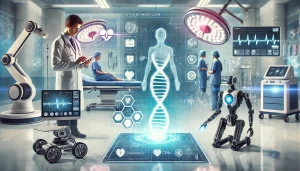
Transformative Technologies Shaping the Future of Medicine in 2025 and Beyond

The future of healthcare is not just about advancements in medicine, it’s about the technologies transforming how we diagnose, treat, and care for patients. As we move into 2025, some groundbreaking innovations are reshaping the industry, offering new possibilities for personalised care, improved patient outcomes, and operational efficiency. From AI-driven diagnostics to the potential of brain-computer interfaces, these advancements aren’t just trends, they are the building blocks of a smarter, more accessible healthcare system.

Here’s a deeper dive into the cutting-edge advancements revolutionising medicine.

Artificial Intelligence: Powering Personalised Healthcare

Artificial intelligence (AI) is revolutionising the medical field, driving efficiencies and improving outcomes across nearly every facet of healthcare. AI’s ability to process vast datasets enables unparalleled advancements in diagnostics, predictive analytics, and treatment planning.

AI-powered tools can now identify diseases like cancer, Alzheimer’s, and diabetic retinopathy earlier and more accurately than traditional methods. For instance, imaging software utilising AI algorithms has shown remarkable success in detecting subtle anomalies in CT scans, mammograms, and MRIs that might elude human eyes.

AI is also transforming treatment by creating personalised care plans based on a patient’s genetic profile, lifestyle, and health history. This approach improves treatment efficacy, reduces side effects, and ensures better patient adherence. Beyond diagnostics and treatment, AI-powered chatbots and virtual assistants are enhancing patient engagement, providing 24/7 support for medication reminders, symptom tracking, and general inquiries.

CRISPR and Gene Editing: Rewriting the Genome

CRISPR-Cas9, a revolutionary gene-editing technology, has made it possible to edit DNA with precision and efficiency, opening the door to treating and potentially curing genetic disorders. This technology allows scientists to “cut and paste” sections of DNA, correcting mutations responsible for diseases like sickle cell anaemia, Huntington’s disease, and certain cancers.

In clinical trials, CRISPR has already demonstrated promising results. For example, patients with beta-thalassemia – a severe blood disorder – are now living without the need for regular blood transfusions after receiving CRISPR-based therapies. Beyond curing genetic diseases, CRISPR is also being explored for enhancing immunity against viruses like HIV and combating antibiotic-resistant bacteria.

Ethical concerns remain a key consideration, especially regarding germline editing (modifying genes in embryos). However, as research progresses, the potential for CRISPR to transform medicine cannot be overstated.

Nanomedicine: Targeting Diseases at the Molecular Level

Nanomedicine harnesses the power of nanotechnology to revolutionise how diseases are treated and diagnosed. By engineering nanoparticles to interact with cells at the molecular level, this technology enables precise targeting of diseased tissue while sparing healthy cells.

In oncology, nanomedicine is showing tremendous promise. Nanoparticles loaded with chemotherapy drugs can be directed specifically to tumours, reducing side effects and improving efficacy. Similarly, nanosensors are being developed to detect biomarkers of diseases like Alzheimer’s and Parkinson’s at their earliest stages, facilitating earlier interventions.

The potential applications of nanomedicine extend to regenerative medicine, where nanomaterials are used to repair damaged tissues and organs, as well as in vaccine delivery systems that improve immune response.

Predictive Genomics: Anticipating Health Risks

Predictive genomics leverages advances in genetic sequencing and data analytics to identify an individual’s susceptibility to diseases. By analysing a patient’s genetic information, healthcare providers can offer tailored lifestyle recommendations and preventive strategies to reduce the risk of developing conditions like diabetes, cardiovascular diseases, and certain cancers.

This approach empowers individuals to make informed health decisions and enables early interventions that can save lives and reduce healthcare costs. Predictive genomics is also playing a crucial role in family planning, helping prospective parents understand the likelihood of passing on genetic disorders to their children.

Synthetic Biology: Engineering Life for Medical Breakthroughs

Synthetic biology combines biology and engineering to design and construct biological systems with specific functionalities. This cutting-edge field is already driving innovation in drug development, where engineered bacteria are being used to produce compounds that were previously difficult or costly to synthesise.

In medicine, synthetic biology offers groundbreaking applications such as designing gene circuits that detect cancer cells and trigger the production of therapeutic molecules directly at the site of the tumour. Additionally, synthetic biology is being used to develop biosensors that can monitor health conditions in real-time and even signal the presence of pathogens in the body.

As the technology matures, it promises to revolutionise areas such as vaccine development, personalised medicine, and even synthetic organ production.

Brain-Computer Interfaces: Bridging Mind and Technology

Brain-computer interfaces (BCIs) are emerging as groundbreaking tools for individuals with neurological disorders or mobility impairments. These systems establish a direct connection between the brain and external devices, enabling users to control computers, prosthetics, and other tools using their thoughts.

For individuals paralysed by spinal cord injuries or conditions like ALS, BCIs offer newfound independence. Research is advancing rapidly, with clinical trials demonstrating how these systems can restore communication and mobility. For example, BCIs are being used to help stroke patients regain motor control by directly stimulating brain regions responsible for movement.

The applications of BCIs extend beyond healthcare into enhancing cognitive abilities and memory retention. As the technology evolves, it could play a significant role in treating conditions like epilepsy, depression, and even chronic pain by delivering targeted neural interventions.

3D Printing: Tailoring Medical Solutions

The versatility of 3D printing is revolutionising healthcare by offering patient-specific solutions that were previously unimaginable. Customised prosthetics, dental implants, and surgical tools are now being produced with unprecedented speed and precision. For instance, surgeons can 3D-print anatomical models of a patient’s organs to plan complex surgeries, reducing the risk of complications.

One of the most exciting advancements is bioprinting, which involves using living cells to create tissues and, potentially, fully functional organs. Researchers have already bioprinted skin grafts for burn victims and are working on creating bioprinted kidneys and livers. This breakthrough could address the global organ donor shortage and save countless lives.

3D printing is also making healthcare more affordable by reducing the production costs of medical devices and equipment, further expanding its transformative impact.

Telemedicine and Remote Monitoring: Expanding Access to Care

Telemedicine has transitioned from an auxiliary service to a cornerstone of modern healthcare delivery. By allowing patients to consult with healthcare providers remotely, telemedicine has overcome geographical barriers, bringing specialised care to underserved and rural areas.

Remote monitoring devices, such as wearable sensors and home-based diagnostic tools, enable continuous health tracking. Devices like smartwatches can monitor heart rate, oxygen levels, and even detect atrial fibrillation, alerting patients and clinicians to potential issues before they escalate. For chronic disease management, such as diabetes or hypertension, remote monitoring systems allow for personalised care adjustments, reducing hospital admissions and improving outcomes.

Moreover, telemedicine platforms are integrating AI-driven tools to assist clinicians in interpreting data, ensuring timely interventions. These technologies are particularly beneficial in resource-constrained settings, where they bridge gaps in access and empower patients to take charge of their health.

Exoskeletons for Mobility: Redefining Rehabilitation

Robotic exoskeletons are transforming rehabilitation for individuals recovering from injuries or managing disabilities. These wearable devices use advanced sensors and motors to assist movement, enabling patients to walk, climb stairs, or perform physical therapy exercises.

For stroke survivors and individuals with spinal cord injuries, exoskeletons offer the possibility of regaining mobility and independence. They are also being adopted in rehabilitation clinics to improve therapy outcomes by providing consistent, controlled assistance during recovery exercises. In the future, exoskeletons may become a common sight in homes, workplaces, and rehabilitation centres, empowering individuals with permanent mobility challenges.

The Future of Medicine: Innovation with Purpose

These advancements collectively illustrate how technology is reshaping the healthcare landscape. By addressing critical challenges, from accessibility and affordability to precision and prevention, these innovations are creating a future where medicine is more effective, personalised, and inclusive. As these technologies evolve, they will continue to redefine the possibilities of what healthcare can achieve.


How AI-Powered Tools Are Reshaping Healthcare Documentation

Medical note-taking has always been a cornerstone of effective healthcare, ensuring continuity of care and enabling informed decision-making. Yet, for decades, it has been a time-consuming and error-prone task, pulling healthcare professionals away from what matters most – their patients. With the rise of artificial intelligence (AI), this narrative is now changing dramatically.

The Challenges of Traditional Note-Taking

Anyone who’s worked in healthcare or implemented these systems knows the grind of documentation. It’s not just about writing things down, it’s about precision, compliance, and juggling multiple systems.

Here’s where some of the pain points are:

  1. Time Sink: Documentation can consume up to half of a healthcare provider’s day, stealing time that could be spent with patients.
  2. Error-Prone Processes: Manual data entry leaves room for mistakes, these mistakes that can have serious consequences.
  3. Burnout: The administrative burden contributes to exhaustion and decreased job satisfaction.

These aren’t new problems, but AI is stepping in to offer fresh, practical solutions.

The Early Challenges of Voice Recognition Technology

Voice recognition technology has been around for years, but for a long time, it wasn’t the seamless solution it promised to be. Healthcare professionals faced significant hurdles:

  • Extensive Training: Earlier systems required practitioners to spend hours training the software to recognize their voice, tone, and accent. This steep learning curve often felt like more effort than it was worth.
  • Inaccuracy: Even after training, many systems struggled with medical jargon, accents, or background noise, leading to frustration and poor adoption.
  • Rigid Systems: Early tools often lacked adaptability, requiring users to stick to rigid commands or structures.

These challenges made voice recognition a tool that many were hesitant to adopt, despite its potential.

How Modern AI Solves These Issues

The AI behind today’s voice recognition tools is lightyears ahead of its predecessors. Here’s how it addresses the curve:

  1. Minimal Training: Advanced AI models now come pre-trained on vast datasets, including medical terminology, reducing the time practitioners need to invest in customization.
  2. Adaptability: Machine learning enables these tools to learn and adapt to individual voices over time, even picking up on accents, speech patterns, and specialized vocabulary.
  3. Noise Tolerance: Modern systems are designed to filter out background noise, making them effective in busy hospital environments.
  4. Real-Time Transcription: AI now offers real-time accuracy, meaning healthcare professionals can focus on their patients while the system captures everything seamlessly.

This shift means that voice recognition is no longer a chore, it’s a powerful ally.

How AI is Transforming Note-Taking

AI-powered tools go far beyond voice recognition. They’re rethinking the entire process of medical documentation:

  • Smart Summaries: AI tools analyze conversations and extract key information, generating concise, actionable notes.
  • Contextual Alerts: These systems can flag inconsistencies or missing details, helping to improve the quality of documentation.
  • Seamless Integration: AI-driven tools integrate directly with electronic health records (EHRs), eliminating redundant data entry and improving workflow efficiency.

The Benefits for Healthcare Providers and Patients

This transformation isn’t just about efficiency, it’s about improving care.

For Providers:

  • Less Admin Time: Automation reduces time spent on documentation, freeing up hours for patient interaction.
  • Enhanced Accuracy: By reducing manual input, AI minimizes errors.
  • Lower Stress Levels: Streamlined workflows alleviate the pressure of administrative tasks.

For Patients:

  • More Attention: With less time spent on screens, providers can engage more deeply with patients.
  • Better Outcomes: Accurate notes lead to informed diagnoses and treatments.
  • Faster Care: Streamlined processes reduce delays.

Examples of AI Tools Leading the Way

AI in medical note-taking isn’t a distant dream, it’s here, and it’s effective. Tools like Suki AI, DeepScribe, and Nuance Dragon Medical One are transforming the industry by:

  • Automatically transcribing conversations during consultations.
  • Integrating notes directly into EHR systems.
  • Reducing documentation time by up to 70%.

These tools are redefining what’s possible in healthcare.

Overcoming Barriers to Adoption

As promising as AI is, its adoption isn’t without challenges:

  1. Data Privacy: Ensuring compliance with regulations like HIPAA is critical to maintaining patient trust.
  2. Training and Buy-In: Staff need proper training to maximize the benefits of AI tools. Resistance to change can be a hurdle, but success stories are helping to turn the tide.
  3. Cost Concerns: Smaller practices may worry about affordability, though scalable solutions are becoming more common.

By addressing these challenges, healthcare organizations can unlock the full potential of AI.

A Look to the Future

The future of AI in medical note-taking is bright. As technology evolves, we can expect tools that:

  • Predict patient needs based on historical data.
  • Break language barriers with real-time multilingual transcription.
  • Continuously learn and improve to meet the unique demands of every practice.

These advancements will shape a healthcare system where technology enhances human expertise, not replaces it.

AI is transforming medical note-taking from a frustrating task into a seamless process. By addressing the challenges of traditional methods, and even overcoming the pitfalls of earlier voice recognition technologies, AI is enabling healthcare professionals to focus on what they do best: caring for patients.

The Inspirational Power of Self-Talk: Transform Your Inner Dialogue to Transform Your Life

Every day, we engage in a conversation that no one else can hear. It’s a quiet yet powerful dialogue that happens within us, shaping how we see ourselves, our potential, and the world around us. This is self-talk. And while it often goes unnoticed, it holds the key to our confidence, our resilience, and ultimately, our success.

But why does self-talk matter so much? Let’s dive into the significance of self-talk, why positivity is crucial, how it can uplift your life, and most importantly, how to nurture it to unlock your full potential.

Why Self-Talk Is Crucial

Our thoughts create our reality. The words we tell ourselves influence our beliefs, and our beliefs shape our actions. When your self-talk is positive, it acts as a supportive coach, cheering you on through challenges and encouraging you to reach higher. But when it’s negative, it becomes a relentless critic, eroding your confidence and limiting your potential.

Consider two people facing the same setback: one tells themselves, “I’ll learn from this and try again.” The other whispers, “I always fail; I’m not good enough.” Which one do you think will rise faster?

Self-talk is the lens through which you see yourself. A positive lens builds resilience and fuels growth, while a negative one magnifies doubts and fears.

The Benefits of Positive Self-Talk

Positive self-talk is a lot more than just feel-good fluff, it’s a tool with real, tangible benefits:

  1. Builds Confidence: Encouraging words remind you of your strengths, making challenges seem conquerable.
  2. Boosts Mental Resilience: It helps you bounce back from failures by focusing on solutions rather than problems.
  3. Reduces Stress: Positive affirmations calm the mind, reducing anxiety and promoting clarity.
  4. Enhances Performance: Athletes, entrepreneurs, and high achievers use positive self-talk to stay focused and motivated.
  5. Fosters Self-Love: Kind words remind you that you’re deserving of happiness, even on your toughest days.

How to Develop Positive Self-Talk

Transforming your inner dialogue doesn’t happen overnight, it’s a journey of consistent effort. Here’s how to start:

1. Awareness Is the First Step

Pay attention to your thoughts. Are they kind, supportive, or filled with self-doubt? Awareness helps you catch negative patterns.

2. Challenge the Inner Critic

When you catch yourself thinking negatively, ask: “Is this thought true? Would I say this to a loved one?” Replace harsh critiques with empowering statements.

3. Adopt Affirmations

Repeat phrases that reinforce your worth and capability. Statements like “I am enough,” or “I can handle this,” might feel awkward at first, but over time, they shape your mindset.

4. Surround Yourself with Positivity

The environment you’re in can influence your self-talk. Spend time with people who uplift you and consume content that inspires growth.

5. Practice Gratitude

Gratitude shifts your focus from what’s lacking to what’s abundant. Write down three things you’re grateful for each day, and let this mindset seep into your self-talk.

6. Visualise Success

Picture yourself succeeding, and speak to yourself as if it’s already happening: “I’m proud of how far I’ve come.” This creates a roadmap in your mind, leading you toward your goals.

Start A New Narrative Today

Your self-talk is the most powerful story you’ll ever tell, because it’s the story you live by. Start today by rewriting the script. Let your words inspire courage, fuel determination, and light the path forward.

The truth is, life isn’t always easy. Challenges will arise, and doubts may creep in. But with the power of positive self-talk, you’ll always have a steadfast ally within. You are capable, you are resilient, and you are worthy of everything you dream of achieving.

Remember: Your words are your superpower. Speak them wisely, and they’ll carry you further than you ever imagined.

Healthcare IT Projects: Delivering Excellence in a High-Stakes Environment

In healthcare, IT project management is much more than delivering projects on-time and within budget, it’s about ensuring the technology enhances patient care and meets stringent regulatory requirements. One small oversight could impact the safety and well-being of patients, underscoring the high stakes of this sector. How do you balance technical expertise, regulatory compliance, and the critical need for flawless execution? Let’s explore best practices that make IT projects in healthcare successful while addressing the unique challenges of this vital industry.

1. Prioritize Rigorous Risk Management from Day One

Healthcare IT projects carry significant risks, not only from a technological standpoint but also due to regulatory demands and their potential impact on patient outcomes. Early risk management is crucial.

  • Understand Regulatory Requirements: Healthcare is one of the most heavily regulated industries, with frameworks like HIPAA or GDPR shaping project parameters. Ensuring compliance from the outset avoids costly delays or penalties later.
  • Conduct Regular Risk Assessments: Classify risks based on impact and likelihood, addressing the most critical first. Develop robust mitigation strategies that anticipate challenges like system failures or regulatory changes.
  • Implement Strong Data Security Measures: Breaches of sensitive healthcare data can be catastrophic. Ensure robust cybersecurity protocols, including encryption and multi-factor authentication, are baked into your project from the beginning.

2. Engage Stakeholders Early and Often

Healthcare IT projects affect a wide range of stakeholders, from clinicians and administrative staff to regulatory bodies. Their input is crucial to project success.

  • Involve Clinicians and Staff: End-users like doctors, nurses, and administrators may not have a technical background, but their input ensures that systems meet clinical needs and are easy to use.
  • Communicate Clearly and Frequently: Transparent, jargon-free updates are essential to keep all stakeholders aligned. Use visual tools like Gantt charts to simplify complex progress reports for non-technical participants.
  • Manage Expectations: Clearly define the project’s scope, timeline, and deliverables from the start. Prevent scope creep by setting realistic goals and regularly revisiting them to align expectations across the board.

Note: Build trust with stakeholders when the stakes are high through constant engagement, clear communication, and setting achievable expectations.

3. Adopt Agile, but Adapt for Healthcare

Agile methodologies have revolutionized IT project management, but in healthcare, the need for meticulous testing and compliance means you must adapt traditional Agile principles.

  • Set Realistic Timelines: Healthcare IT projects are often more complex than other sectors. Set ambitious yet achievable deadlines to avoid burnout and errors.
  • Break Projects into Manageable Sprints: Agile’s sprint-based approach allows for continuous improvement. Regular testing and feedback loops ensure compliance and improve system usability.
  • Monitor Progress Closely: Regularly review progress against timelines, and if delays occur, communicate them promptly. Adjust your plan as needed to stay on track.

Note: Agile can work wonders in healthcare, but it needs to be tempered with a regulatory focus, ensuring that each sprint meets compliance and operational standards.

4. Maintain Flexibility and Adaptability

The healthcare environment is dynamic, with frequent changes in regulations and unforeseen challenges that can impact IT projects. Flexibility is key.

  • Adapt to Changing Regulations: Regulatory updates can occur unexpectedly. Stay informed and be ready to adjust your project plan accordingly to maintain compliance.
  • Prepare for Unexpected Challenges: Whether it’s a change in leadership, a technical failure, or an unexpected external event like a pandemic, healthcare IT projects must remain adaptable. Build contingency plans to handle unforeseen disruptions.

5. Ensure Quality Assurance and Testing

In healthcare, where the margin for error is small, quality assurance (QA) and rigorous testing are non-negotiable.

  • Thorough Testing: Systems must undergo multiple levels of testing, from technical validation to user acceptance testing, ensuring they meet both clinical and operational standards before going live.
  • Continuous Improvement: Even after the system is operational, monitor performance and gather user feedback. Regular updates and improvements ensure long-term effectiveness and reliability.

Note: Testing should mimic real-world clinical scenarios to ensure systems can handle the high-pressure healthcare environment without fail.

6. Post-Go-Live Support: Plan for the Unexpected

The moment an IT project goes live in healthcare, the real work begins. Continuous support is critical to ensure smooth operation and user satisfaction.

  • Plan for Ongoing Support: After launch, ensure a dedicated support team is available 24/7 to resolve any issues as they arise. This ensures patient care remains uninterrupted.
  • Monitor System Performance: Regularly track system performance and gather feedback to identify areas for improvement, ensuring the technology continues to meet evolving clinical needs.

A Prescription for Success

Managing IT projects in healthcare requires more than just technical skills, it demands a deep understanding of the regulatory landscape, a focus on patient outcomes, and the ability to engage and align a diverse set of stakeholders. By following these best practices, from rigorous risk management and stakeholder engagement to ensuring continuous improvement, you can deliver IT solutions that not only meet technical and regulatory requirements but also improve patient care and operational efficiency.

Future of Healthcare: AI, Patient Empowerment, and Population Health

Technology is continuously reshaping the future of healthcare, shifting the focus from reactive to proactive care. Integrated systems are becoming essential in this transformation, enabling healthcare providers to anticipate patient needs, manage population health more effectively, and deliver value-based care. By connecting primary care, specialty care, and risk adjustment, and by aligning payers and providers through data transparency and collaboration, healthcare organizations can achieve better outcomes, reduce inefficiencies, and improve overall patient experiences.


Proactive healthcare also prioritises empowering patients to take an active role in managing their health. Accessible tools and personalised guidance are redefining how individuals engage with their care, transforming them from passive recipients to active participants. When patients are equipped with resources tailored to their unique needs, they are not only more involved but also more likely to adhere to care plans, improving outcomes and satisfaction.

Artificial intelligence (AI) further strengthens this shift by enhancing decision-making and reducing administrative burdens. From predictive analytics to clinical decision support, AI enables clinicians to focus on patient care rather than paperwork. However, to unlock AI’s full potential, transparency and ethical considerations must guide its implementation. AI must complement, not replace, human expertise, ensuring it supports clinicians in delivering accurate, compassionate care.

Highlights:

  1. Proactive Population Health Management: Advanced systems promote seamless coordination, data-driven insights, and equity-driven initiatives to address health disparities and improve outcomes for diverse populations.
  2. Empowered Patients: Tools that encourage proactive involvement strengthen the patient-provider relationship, increase adherence to care plans, and foster better long-term health outcomes.
  3. AI as a Clinical Ally: Thoughtfully implemented AI solutions streamline workflows, reduce clinician burnout, and enhance care quality while maintaining ethical oversight and transparency.

Healthcare’s future hinges on innovation that complements, rather than compromises, the human aspects of care. Technology must be embraced as a tool for empowerment, enabling providers to deliver efficient, patient-centred services while safeguarding compassion and trust. The real challenge lies in integrating these solutions thoughtfully, ensuring they address current needs and lay the groundwork for future advancements.

As healthcare leaders, innovators, and professionals, it’s time to commit to solutions that deliver tangible value. By fostering proactive approaches, equipping patients with the tools they need, and leveraging ethical AI, we can build a healthcare system that is equitable, efficient, and resilient.

Transforming Stroke Care: How AI is Revolutionising Patient Outcomes in England

In a groundbreaking milestone for healthcare, all 107 stroke centres in England are now leveraging artificial intelligence (AI) technology to improve stroke care outcomes. This development is a testament to the power of technology in saving lives and enhancing recovery for thousands of stroke patients every year.

AI’s Impact on Stroke Care

According to Darrien Bold, head of elective care at NHS England, the integration of AI in stroke care has already shown promising results. Early analysis reveals a remarkable achievement: AI has reduced the time from stroke diagnosis to treatment by over 60 minutes. This adds emphasis and avoids monotony.. This is a critical advancement, as every minute saved during a stroke significantly reduces the risk of long-term disability and increases the chances of survival.

Moreover, AI has tripled the number of patients recovering with minimal or no disability. The percentage of stroke patients achieving functional independence has jumped from 16% to an impressive 48%, underscoring the transformative role AI is playing in improving patient outcomes.

How AI is Changing Stroke Treatment

The primary advantage of AI lies in its ability to rapidly process and interpret brain scans. Technologies such as the Brainomix e-Stroke system and the RapidAI software are providing clinicians with real-time insights. These systems enable doctors to make faster, more informed decisions about the most appropriate treatments for their patients, such as whether surgery or clot-removal medication is required.

For example, Brainomix, which was endorsed by the National Institute of Health and Care Excellence (NICE) in February 2024, has been recognised for its ability to enhance clinical decision-making. Similarly, RapidAI is helping clinicians save lives by delivering quick and accurate analysis of brain images, ensuring treatment is administered promptly and effectively.

Looking Ahead

The success of AI in stroke care is a beacon of hope for the future of healthcare. However, it is only the beginning. The continued adoption and integration of AI across other areas of medicine could further enhance patient outcomes and improve operational efficiency.

As Bold aptly stated, “We must continue to be flexible and innovative, and to prioritise the quality and safety of care.” This commitment to leveraging technology for better healthcare outcomes is a model for global health systems to emulate.

The integration of AI in stroke care highlights the importance of innovation in saving lives and improving patient outcomes. As we celebrate these advancements, it’s crucial for policymakers, clinicians, and tech developers to continue collaborating to unlock the full potential of AI in healthcare.

Unpacking the Past: How Letting Go Fuels Personal Growth

Whether we accept it or not, we all carry invisible baggage, a collection of past disappointments, failures, and regrets that weigh us down more than we realise. It’s easy to think that holding onto these memories protects us, reminding us not to make the same mistakes twice. But could these remnants of the past be the very things preventing us from growing?

The Emotional Clutter That Holds You Back
Visualise trying to sprint through life while dragging a heavy suitcase in each hand that are full of unresolved issues. Every step becomes slower, every achievement harder to reach. The truth is, our emotional clutter, whether it’s the grudges, failures, or missed opportunities, can trap us in a cycle of self-limitation. But the good news is: just like how decluttering your physical space can breathe new life into your environment, emotional and mental decluttering can free your mind and soul, making room for fresh opportunities, renewed focus, and personal growth.

Why It Matters
Our world is obsessed with self-improvement, however we often forget that real progress doesn’t come from adding more goals to the list, it comes from subtracting the negative emotions holding us back. Many people invest time in trying to become the best versions of themselves, yet never stop to clear the mental roadblocks the picked up and are still standing in the way.

Letting go of past baggage is not about forgetting. It’s about forgiveness, release, and the conscious choice to allow yourself to grow beyond the past. Without making space for future success, your personal evolution becomes stunted.

Steps to Emotional and Mental Decluttering: Forgive, Release, Thrive
To move forward, you must embrace a process of letting go. Here’s how:

  1. Acknowledge Your Baggage
    The first step to emotional decluttering is awareness. Identify all the emotional weights you’re carrying, whether they are past failures, mistakes, unresolved relationships or missed opportunities. People are often weighed down without even realising it. Take time to reflect and pinpoint what holds you back.
  2. Practice Forgiveness
    Forgiving others and, more importantly, yourself, can be transformative. It’s not about excusing any wrongdoing, but about freeing yourself from the toxic emotions attached to past events. Forgiveness is the key that unlocks the chains binding you to the past.
  3. Adopt a Forward-Looking Mindset
    Dwelling on what could have been, or missed opportunities limits what could be. Shift your mindset towards future possibilities, reframing past failures as stepping stones rather than obstacles. Remind yourself that growth often emerges from the ashes of failure.
  4. Create Space for New Opportunities
    Just as decluttering your home makes room for new experiences, clearing your emotional clutter creates space for growth and success. Letting go is like opening a window in a stuffy room, in this case it allows fresh ideas, people, and opportunities to flow into your life.
  5. Rebuild Your Emotional Toolkit
    Equipping yourself with strategies to handle setbacks going forward. Developing a habit of journaling or mindfulness to stay present and prevent future emotional clutter from building up. Surround yourself with positive influences that reinforce growth.

Letting Go: Not the End, But a New Beginning
Remember that letting go is not about loss, it’s about making room for what comes next. By releasing the weight of past baggage, you position yourself to sprint towards a future free of limitations. When you finally learn to let go, you’ll find that your capacity for success, happiness, and personal growth expands beyond anything you imagined.

The Future Is Lighter Without the Past
The art of letting go is essential for anyone seeking true personal transformation. It requires self-awareness, forgiveness, and a deliberate effort to create space for future opportunities. By emotionally decluttering your life, you’ll make room for growth, newfound happiness, and future success not just for you but also for those around you.

Managing Technology SMEs in Healthcare: Lessons from the Frontlines

Leading a team of specialized IT professionals, or Subject Matter Experts (SMEs), within a healthcare setting is no small task. These professionals possess deep technical expertise that is vital to the smooth operation of healthcare institutions. However, the challenges of managing such a team go beyond technical prowess; they require a delicate balance of collaboration, innovation, and alignment with strategic goals. In healthcare, where technology directly impacts patient care and business operations, effective leadership is crucial.

1. The Challenges of Managing IT SMEs in Healthcare

Managing IT SMEs in healthcare involves navigating a complex landscape where technical decisions can have far-reaching implications across various business units. The specialized nature of these teams can sometimes lead to silos, making it difficult to foster collaboration and align efforts with broader organizational goals.

  • Collaboration Across Business Units: Healthcare organizations are multifaceted, with departments such as Finance, Supply Chain, Human Capital, Patient Experience, and Clinical Operations all playing critical roles. Each department has unique needs and priorities, and IT SMEs must collaborate effectively with these diverse units to deliver integrated technology solutions. However, the highly specialized focus of SMEs can make cross-functional collaboration challenging, especially when translating technical jargon into terms that non-technical stakeholders can understand.
  • Balancing Innovation with Stability: Healthcare is a field where the stakes are incredibly high. Innovation in IT can lead to significant improvements in patient care and operational efficiency, but it also carries risks. New technologies must be carefully vetted to ensure they don’t disrupt critical systems or introduce unforeseen vulnerabilities. The challenge lies in fostering a culture of innovation while maintaining the stability and reliability that healthcare demands.
  • Aligning with Strategic Goals: In a healthcare setting, technology initiatives must be closely aligned with the institution’s strategic goals, whether they involve enhancing patient care, improving operational efficiency, or complying with regulatory requirements. SMEs may sometimes focus too narrowly on their technical expertise, losing sight of the broader organizational objectives. It’s essential to bridge this gap by ensuring that every technology project contributes to the institution’s long-term vision.

2. Best Practices for Leading IT SMEs in Healthcare

To overcome these challenges, healthcare leaders must adopt best practices that promote collaboration, drive innovation, and ensure alignment with strategic goals.

  • Fostering Cross-Functional Collaboration: Effective collaboration starts with breaking down silos. Encourage regular interaction between IT SMEs and other business units through cross-functional teams, joint workshops, and open communication channels. For example, involving SMEs in discussions with Finance can help align technology initiatives with budgetary constraints, while collaboration with Clinical Operations ensures that new technologies meet the practical needs of healthcare providers. Establishing a common language and mutual respect between departments is key to successful collaboration.
  • Promoting a Culture of Innovation with Accountability: Innovation should be encouraged, but it must be balanced with the need for stability and compliance. Create an environment where SMEs feel empowered to explore new technologies and approaches, but also emphasize the importance of thorough testing, risk assessment, and adherence to regulatory standards. Regularly review and refine innovation processes to ensure they are both agile and responsible.
  • Ensuring Strategic Alignment: Keep your team focused on the organization’s strategic goals by regularly communicating these objectives and linking individual projects to the broader mission. Involve SMEs in the strategic planning process, allowing them to contribute their expertise while gaining a deeper understanding of the institution’s long-term vision. Use key performance indicators (KPIs) that align with strategic goals to measure the success of technology initiatives and keep the team focused on delivering value.
  • Investing in Leadership Development: Managing a team of SMEs requires more than just technical knowledge, it demands strong leadership skills. Invest in leadership development for yourself and your team leaders, focusing on areas such as communication, project management, and change management. Leaders who can effectively translate technical concepts for non-technical audiences and build consensus across departments will be better equipped to guide their teams through the complexities of healthcare IT.
  • Prioritizing Patient-Centered Innovation: In healthcare, the ultimate goal of any technology initiative should be to improve patient care. Encourage your team to always consider the end user, whether it’s the patient, clinician, or administrative staff, when developing and implementing new technologies. By placing the patient experience at the center of innovation, you ensure that your team’s efforts have a meaningful impact on the quality of care provided.

3. Lessons Learned from the Frontlines

Reflecting on my experience managing IT SMEs in healthcare, several key lessons have emerged that underscore the importance of effective leadership in this challenging environment:

  • The Importance of Empathy and Communication: Effective leadership begins with understanding the diverse perspectives and challenges of different departments. Empathy allows leaders to appreciate the unique pressures faced by IT professionals, clinicians, and other stakeholders. Clear, consistent communication across functions helps bridge gaps and fosters a collaborative atmosphere, enabling smoother problem-solving and project execution.
  • The Value of Resilience and Flexibility: The healthcare sector is dynamic and often unpredictable. IT leaders must be resilient and adaptable to handle unexpected challenges, such as system failures or shifting regulatory requirements. Cultivating a flexible mindset within your team ensures they are prepared to respond swiftly and effectively to changes, maintaining operational continuity and driving innovation.
  • The Need for Continuous Learning: Technology in healthcare evolves rapidly, necessitating a commitment to ongoing learning. Encourage your team to stay abreast of the latest trends and best practices through professional development opportunities. A culture of continuous learning not only enhances technical capabilities but also drives innovation and keeps your team engaged and motivated.
  • The Role of Emotional Intelligence: Emotional intelligence (EI) is crucial for managing a team of IT SMEs. Leaders with high EI can better understand and manage their own emotions and those of their team members. This helps in building stronger relationships, resolving conflicts, and maintaining a positive work environment. Being attuned to the emotional dynamics within your team allows you to address issues proactively and support your team members effectively.
  • The Value of Autonomy: While oversight is necessary, allowing your team a degree of autonomy can lead to greater innovation and job satisfaction. Empowering IT SMEs to make decisions within their areas of expertise fosters a sense of ownership and responsibility. This autonomy can lead to more creative solutions and a more motivated team. It’s important to strike a balance between providing guidance and allowing flexibility, ensuring that team members have the freedom to explore new ideas while staying aligned with organizational goals.

Managing technology SMEs in healthcare is a demanding yet rewarding role that combines empathy, resilience, and a commitment to continuous learning. By fostering collaboration across business units, promoting a balanced approach to innovation, and ensuring alignment with strategic goals, leaders can guide their teams to success. These lessons from the frontlines highlight the importance of strong leadership in navigating the complexities of healthcare IT and making a meaningful impact on patient care and organizational success.

Building Resilient IT Infrastructure in Healthcare: Lessons Learned

In the healthcare industry, where lives are at stake, the importance of resilient IT infrastructure cannot be overstated. With systems required to operate 24/7, ensuring they remain reliable and accessible is critical. Drawing from my experience managing teams and overseeing technology solutions within a healthcare institution, I’ve learned that effective IT management in this sector involves a blend of technical acumen, empathy, and strategic leadership. Here are the best practices and lessons learned for building and managing resilient IT infrastructure in healthcare.

Prioritizing Risk Management and 24/7 Accessibility

In healthcare, downtime isn’t just a technical failure, it’s a potential risk to patient safety. IT infrastructure must be designed with uptime as a non-negotiable priority. This involves:

  • Designing for Uptime: Incorporating high-availability clusters, automated backups, and disaster recovery plans ensures that critical systems, like electronic health records (EHR) and imaging systems, remain operational even in the event of hardware failures or natural disasters.

  • Robust Monitoring: Continuous monitoring tools and real-time alerts are essential for detecting and resolving issues before they affect patient care. Regular system health checks and predictive analytics help proactively manage potential risks, keeping hospital systems running smoothly around the clock.

Engaging Stakeholders and Seeing Through the Patient’s Eyes

IT infrastructure in healthcare isn’t just about technology, it’s about the human experience. To build truly resilient systems, it’s essential to:

  • Involve Clinicians and Staff: The end users of healthcare IT systems are often clinicians and administrative staff. Their input is invaluable in shaping systems that are user-friendly and meet clinical needs. Regular engagement and communication with these stakeholders ensure that the infrastructure supports both patient care and operational efficiency.

  • Understand the Patient’s Journey: Placing yourself in the shoes of the patient can guide decisions that improve service delivery. Whether it’s the speed at which a patient’s records are retrieved or the reliability of telehealth services, the services the patient has access to whilst admitted or understanding the patient’s perspective helps prioritize features that enhance care quality.

Meeting Deadlines While Maintaining Flexibility

Healthcare IT projects are often complex, and the ability to balance tight deadlines with the need for flexibility is crucial. Best practices include:

  • Setting Realistic Timelines: While ambitious goals are important, setting realistic deadlines helps prevent rushed work, mistakes, and burnout. Understanding the complexity of healthcare IT projects allows for more accurate planning.

  • Utilizing Agile Methodologies: Agile practices are particularly effective in healthcare IT projects, allowing for continuous improvement and adaptation to changing needs. Breaking the project down into smaller, manageable sprints helps maintain momentum and focus.

  • Adaptability: No two situations are the same, and being flexible in your approach is essential. Whether it’s navigating unexpected hardware failures, responding to cybersecurity threats, or scaling up to meet a sudden influx of patients, the ability to adapt is crucial for maintaining system resilience.

Building and Leading Effective Teams

Managing large teams in healthcare IT requires fostering a collaborative environment and investing in continuous development. This includes:

  • Collaborative Leadership: When everyone from network engineers to data analysts understands the broader mission, providing uninterrupted care to patients, they’re more likely to work together effectively. Regular cross-departmental meetings and shared goals help break down silos and encourage a unified approach.

  • Training and Development: Investing in ongoing education ensures your team is equipped to handle the latest challenges and innovations in healthcare IT. This not only improves the resilience of your infrastructure but also empowers your team to take on new responsibilities with confidence.

Ensuring Quality Assurance and Continuous Improvement

The margin for error in healthcare is minimal, making quality assurance and continuous improvement essential components of resilient IT management:

  • Thorough Testing: Rigorous testing, including user acceptance testing, ensures that all systems function correctly before they’re deployed in a live environment. This helps catch any issues that could impact patient care.

  • Continuous Improvement: After the project goes live, continuous monitoring and feedback collection are key to maintaining the effectiveness and reliability of the system. Encouraging a culture of learning within your team helps drive ongoing enhancements in system resilience.

Building and managing resilient IT infrastructure in healthcare requires a deep understanding of both the technical and human aspects of the environment. By prioritizing uptime, engaging stakeholders, leading collaborative teams, and committing to continuous improvement, healthcare institutions can ensure that their IT systems support the critical mission of providing exceptional care, 24/7.

The Power of Work/Home Harmony: Boosting Productivity and Well-Being

The concept of work-life balance has been a focal point for many professionals striving to achieve success while maintaining personal well-being. However, the traditional idea of balance, is where work and personal life are kept entirely separate. I find that this often leads to stress and dissatisfaction. A more sustainable approach is to pursue work/home harmony, where both aspects of life coexist and complement each other. This subtle shift in perspective can significantly enhance productivity, well-being, and overall happiness.

Rethinking Balance: Harmony vs. Balance

The conventional notion of work-life balance suggests an equal distribution of time and energy between professional and personal life. This perspective, however, is often unrealistic and can feel like walking a tightrope, where any slight misstep could lead to a fall. Life is dynamic, and the demands of work and personal responsibilities fluctuate daily. Attempting to maintain a perfect balance can result in stress, burnout, and a constant sense of guilt when the ideal isn’t achieved.

On the other hand, work/home harmony allows for a more fluid and adaptable approach. It acknowledges that life is not static; priorities shift based on circumstances, emotions, and individual needs. Harmony focuses on integrating work and personal life in a way that they enhance each other rather than compete. This approach fosters a sense of fulfillment and reduces stress, ultimately leading to greater productivity and satisfaction.

The Individual Nature of Work/Home Harmony

Finding harmony between work and home life is not a one-size-fits-all solution. It varies greatly depending on individual lifestyles, career stages, family dynamics, and personal goals. For example:

  • Single parents may prioritize family time during evenings and weekends, structuring their work schedules to accommodate school events and childcare needs.
  • Young professionals might focus more on career growth, dedicating extra hours to professional responsibilities while ensuring time for self-care and relaxation.
  • Freelancers often benefit from flexible work hours, allowing them to integrate personal projects and hobbies into their daily routines.

It’s also essential to recognize the importance of targeted focus on career success without sacrificing health. Ambitious professionals often face the challenge of dedicating significant time to their careers, but it’s vital that this pursuit does not come at the cost of physical or mental well-being. By achieving work/home harmony, you can maintain the intensity required for career success while ensuring that health and personal life are not neglected.

Employers play a crucial role in supporting work/home harmony. Companies that recognize the diverse needs of their employees and offer flexible working arrangements are more likely to foster a productive and satisfied workforce. When employees feel supported in their quest for harmony, they are more engaged, motivated, and loyal.

The Triple Focus: Productivity, Well-Being, and Happiness

Shifting from a rigid work-life balance to a harmonious integration of work and home life can profoundly impact three key areas: productivity, well-being, and happiness.

  • Productivity: A well-rested and fulfilled individual is more focused and efficient. When work and personal life are in harmony, you can manage your time effectively, avoiding burnout and enhancing your ability to concentrate and perform at your best.
  • Well-Being: Mental and physical health are the foundation of a fulfilling life. Harmony encourages listening to your body and mind, allowing for necessary breaks and self-care, which reduces stress and promotes overall well-being.
  • Happiness: Ultimately, both work and personal life should contribute to your happiness. Harmony fosters a sense of control and satisfaction, allowing you to pursue professional success without sacrificing personal joy.

Strategies for Achieving Work/Home Harmony

Achieving work/home harmony requires intentional strategies tailored to individual needs and circumstances. Here are some practical approaches:

  • Prioritize Wisely: Differentiate between urgent and important tasks. Focus on high-priority work during business hours, and ensure you allocate time for personal activities that contribute to your well-being.
  • Leverage Technology: Use productivity tools to manage your time and tasks efficiently. However, also schedule regular digital detoxes to disconnect from work and truly unwind.
  • Create a Supportive Environment: Whether you’re an employee or an employer, fostering a culture that values work/home harmony is crucial. Employers can lead by example, offer flexible working arrangements, and provide resources like wellness programs to support their teams.

A Harmonious Life Leads to Success

Work/home harmony is a necessity for a happy, healthy, and productive life. By embracing the fluidity of responsibilities and recognizing the unique lifestyles we lead, we can create a personalized approach that enhances productivity, well-being, and happiness. This harmony empowers individuals to thrive both personally and professionally, leading to a more engaged and successful organization.

Let’s make the effort to win at work and win at life by fostering a harmonious integration of our professional and personal lives.