By the time a programme is declared in trouble, the failure is usually months old.
The governance review that triggers the intervention, the escalation that finally reaches the executive team, the moment someone says out loud what everyone has privately known for weeks. None of that is when the failure started. It is when the failure became undeniable.
The real decisions that determined the outcome were made in the first thirty days. In rooms that were not minuted. In conversations that were not followed up. In the silence where challenge should have been.
I have stepped into enough programmes to know this pattern. And the reality is that by the time you are called in to fix something, you are not dealing with a delivery problem. You are dealing with the compounded consequences of a foundation that was never properly laid.
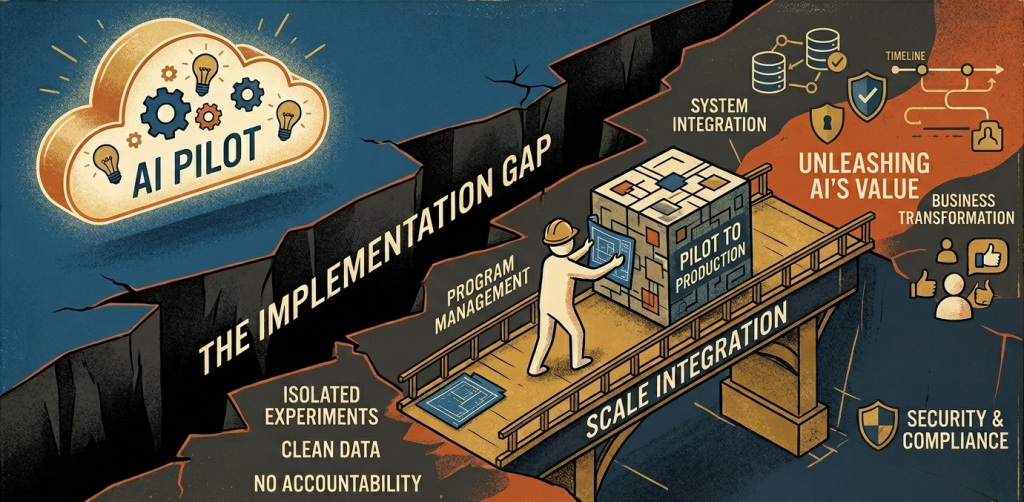
Bain & Company’s 2024 survey of more than 400 executives found that 88% of business transformations fail to achieve their original ambitions. Most of those failures were not caused by what happened in month six. They were caused by what was decided, or not decided, in month one.
The Thirty-Day Window Nobody Takes Seriously Enough
Every programme has a formation period. A window, roughly the first month, where the critical decisions that will shape everything downstream are being made, often informally, often without the weight they deserve.
This is when scope is being interpreted, not just defined. When the people who will actually do the work are forming their first impressions of the leadership, the culture, and whether honesty will be safe here. When the relationships between workstreams are either being built deliberately or left to chance. When assumptions are being made that nobody has written down because everyone assumes everyone else shares them.
Most organisations treat this period as setup. As administration. As the unglamorous precursor to the real work.
It is the real work. Everything that follows is either built on what was established here or fighting against what was not.
The thirty-day window is where programmes are won or lost. We just do not find out until much later.
The Scope That Nobody Challenged
Here is where it starts, almost every time.
The scope arrives with the programme. It comes from somewhere, a business case, a procurement process, a senior stakeholder’s vision, a consultancy’s recommendation. It has been approved. It has a budget attached to it. It has a go-live date.
And in the first thirty days, the people now responsible for delivering it read it, sense the problems, and say nothing.
Not because they are incompetent. Because the environment has not established that challenge is welcome. Because the approval process gives scope a kind of authority that makes questioning it feel like insubordination. Because there is pressure, spoken or unspoken, to project confidence rather than raise doubt.
So the assumptions embedded in the scope go unexamined. The dependencies that are not owned by anyone get noted and moved past. The timeline that was built on optimism rather than evidence gets accepted as a constraint rather than interrogated as a risk.
PMI’s 2025 Project Success research found that a clear vision of success at the outset gives projects a Net Project Success Score of +41. The absence of that clarity produces a score of -18. A 59-point swing, determined before the plan is even baselined.
And the programme sets off carrying weight it was never designed to carry. The team knows it. The experienced ones, anyway. But the conversation that would surface it has not happened. So the weight gets managed quietly, worked around, absorbed, until the point when it cannot be anymore.
That point arrives later, visibly, dramatically, in a way that looks sudden.
It was not sudden. It was decided in week two when nobody pushed back on the plan.
The Relationships That Were Never Built
Programmes are delivered by people who depend on each other across workstreams, across organisations, across cultural and institutional boundaries that no project plan captures.
Those dependencies only work if the relationships underneath them work. And relationships, real ones, the kind where someone will tell you the truth at 6pm on a Thursday when the news is bad, are not built in kick-off presentations and introductory calls.
They are built in the unglamorous, unscheduled moments of the first thirty days. The informal conversations. The one-on-ones that were not on the plan. The deliberate investment in understanding who the key people are, what they actually care about, what they are worried about, and what they need from you to show up fully.
Most programmes do not make this investment. Leaders are too focused on getting the governance structures right, the plans baselined, the first steering pack prepared. The relational architecture gets left to develop on its own.
It does not develop on its own. It either gets built or it does not. And when it does not, you find out in month four when a critical dependency stalls because two workstream leads have never actually talked, when a key stakeholder disengages because nobody made them feel like a genuine part of the programme, when the supplier relationship that looked functional on paper turns out to have no real trust underneath it.
The fix at that point takes weeks. The investment in week one would have taken an afternoon.
The Conversations Nobody Documented
This one is quieter. Harder to see. But just as damaging.
In the first thirty days of any programme, hundreds of micro-decisions get made in conversations that never make it into the formal record. Someone interprets a requirement and moves on. Two people informally agree on a boundary between workstreams that later becomes a gap nobody owns. A risk gets raised in a corridor and managed privately rather than surfaced. An assumption gets made about what the business actually wants that nobody validates because everyone is too busy moving.
These conversations create the real operating model of the programme. Not the governance framework. Not the RACI. The informal, undocumented, human architecture of how this programme will actually function.
When that architecture is sound, when the right conversations happened and the right things got clarified, programmes have a resilience that is hard to explain on paper. They absorb setbacks. They surface problems early. They self-correct.
When it is not sound, the gaps compound. Every week, the distance between the documented reality and the lived reality grows. The risk register reflects what people were willing to write down, not what is actually keeping them up at night. The plan reflects what was agreed in the room, not what the people closest to the work know is actually achievable.
And somewhere around month three or four, the gap becomes too large to manage quietly.
The Culture That Set Before Anyone Noticed
The most underestimated consequence of the first thirty days is cultural.
Within a month, every person on a programme has formed a working theory of how this environment operates. Is honesty safe here? Does leadership want the truth or does it want reassurance? What happens to the person who raises a problem? Do they get support or do they get blame? Is this a place where people cover for each other or compete with each other?
These conclusions get drawn from small evidence. The way the programme director responded to the first piece of bad news. Whether the first difficult conversation was handled with directness or avoided. Whether the team lead who flagged a risk was thanked for it or made to feel like they were creating problems.
People are extraordinarily good at reading these signals. They adapt fast. And once the culture has set, once the team has learned what is rewarded and what is penalised, changing it is one of the hardest things in programme leadership.
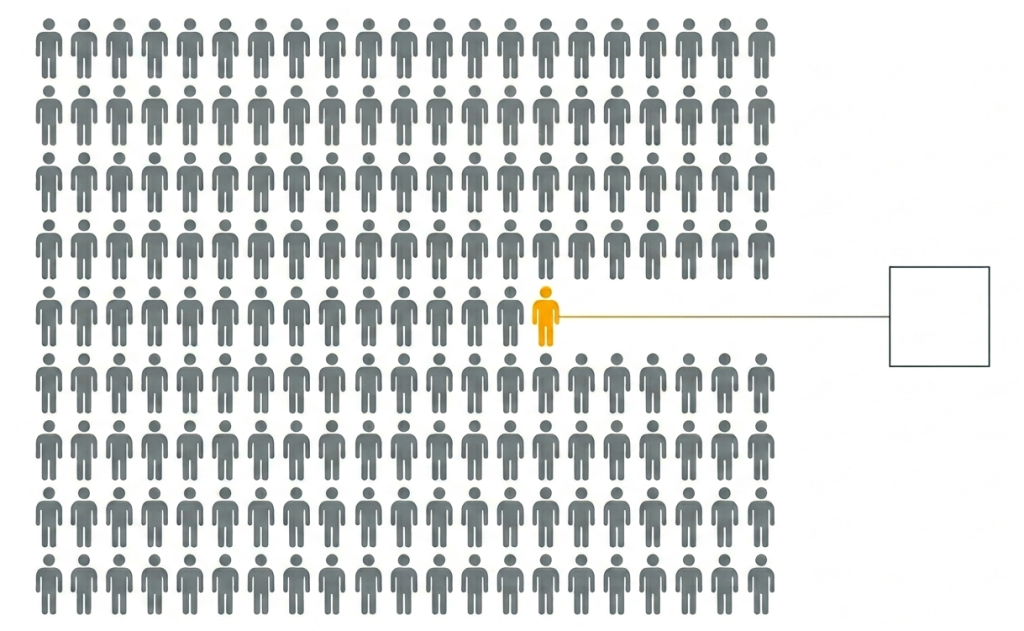
Research by Milliken, Morrison and Hewlin, published in the Journal of Management Studies, found that 85% of employees had felt unable to raise an important issue or concern with their boss, even when they believed it mattered. That figure will not surprise anyone who has led a programme in distress. The information existed. The team knew. Nobody said it.
I have been in programmes where the psychological safety was so low by month two that meaningful escalation had effectively stopped. Not because the problems had stopped. Because the team had learned that surfacing problems did not help them. That information would travel upward selectively, defensively, shaped to protect the messenger rather than inform the leader.
That culture was established in the first thirty days. Nobody designed it. Nobody intended it. But every small signal, every early interaction, every moment where tone was set rather than thought about, built it brick by brick.
And it was almost impossible to dismantle in month five.
What the First Thirty Days Actually Requires
It requires a leader who understands that the work of the first month is not administrative. It is foundational.
It requires the courage to challenge scope before the plan is baselined, even when the pressure is to move quickly. Because the conversation you avoid in week one becomes the crisis you manage in month six.
It requires the deliberate investment in relationships that will not show any return for weeks. The conversations that feel like a luxury when the governance structure needs building and the steering pack is due. They are not a luxury. They are the infrastructure.
It requires the explicit establishment of culture, not through a values statement or a team charter, but through behaviour. Through how you respond to the first piece of bad news. Through whether you ask for honesty or perform as though you want it while rewarding those who tell you what you want to hear.
It requires the discipline to document the undocumentable. To make explicit the assumptions, interpretations, and informal agreements that will otherwise compound silently until they cannot be managed.
And it requires humility. The humility to know that what you do not understand about this organisation, this culture, and these people in the first thirty days will cost you more than anything on the risk register.
The Post-Mortem Nobody Gets Right
Most post-mortems on failed programmes look at the wrong timeline.
They analyse month seven, when the slippage became undeniable. Month five, when the critical path was already broken. Month four, when the relationships between key workstreams had deteriorated beyond functional.
The real analysis belongs in month one. In the decisions that were made without enough information. The challenges that were not raised. The relationships that were not prioritised. The culture that was allowed to form without intent.
By the time a programme looks like it is failing, it has been failing for a long time.
The window where it could have been different closed thirty days in.
Most organisations do not realise that. So they keep investing in better governance frameworks, more sophisticated reporting tools, and more rigorous steering processes, applied at the stage of the programme where the outcome is already largely determined.
The intervention that would actually change the failure rate happens at the beginning. In the unglamorous, under-valued, insufficiently serious first thirty days.
That is where programmes are won.
That is where most of them are lost.