
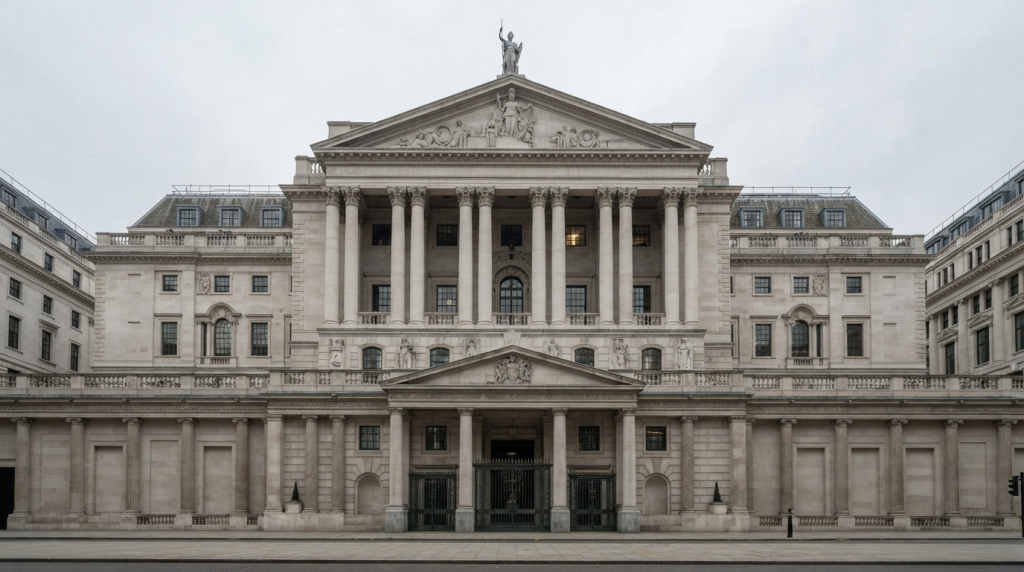
On 13 July 2026, Amazon Web Services, Google Cloud, Microsoft Azure, and Oracle became the first companies formally designated as Critical Third Parties to the UK financial system. The Bank of England, the Prudential Regulation Authority, and the Financial Conduct Authority now hold powers to gather information, assess resilience, and make enforceable rules against the four providers for the services they supply to the financial sector. A 2024 Bank of England and FCA survey found the top three cloud providers accounted for 73% of all cloud providers named by respondents across the UK financial sector. The designation names the risk. It does not resolve it.
This is the tenth piece in the Pre-Mortem series. Five questions, applied to the public record, before a programme has had the chance to succeed or fail.
The Bet
The UK is betting that direct regulatory oversight of four technology providers, applied specifically to their financial-sector services, will reduce the systemic risk from having most of the sector’s cloud infrastructure concentrated in three companies. The Financial Services and Markets Act 2023, which created the CTP regime, gives the Bank of England, PRA, and FCA powers to assess resilience and enforce CTP-specific rules. The designation is a supervisory relationship, not a structural remedy. If that supervisory relationship produces documented, published improvements in resilience before the first major cloud incident in UK financial services, the bet holds.
The Assumption
The regime’s credibility turns on one scoping decision: that overseeing four providers for the services they supply to the UK financial sector is sufficient to contain risks generated by four companies whose infrastructure decisions are made globally, across legal jurisdictions and customer bases far larger than the UK financial system. Microsoft Ireland Operations Limited is the designated entity. Its architecture decisions are made in Redmond. The supervisory perimeter covers the financial-sector slice. The concentration risk does not stop there.
The Sequence
The concentration risk pre-dated the regime by years. The Financial Services and Markets Act 2023 established the legislative basis for the CTP framework. A 2024 Bank of England and FCA survey confirmed the scale: three providers controlling the majority of UK financial-sector cloud infrastructure. HM Treasury announced the first four designations on 10 July 2026, effective 13 July. The sequence is legislation, then evidence, then designation. The risk was present throughout.
The Pager
Rachel Blake MP, Economic Secretary to the Treasury and City Minister, made the designation announcement. The Bank of England, PRA, and FCA share oversight of the four providers under the regime. Three regulators. Three separate mandates. No published document names which of the three leads incident coordination when a designated provider’s outage affects UK financial services. The CTP framework assigns supervisory responsibility. It does not assign the call.
The Proof
The measure that would settle this regime’s effectiveness is a published resilience outcome: a before-and-after comparison of systemic vulnerability at a named date after the CTP rules take effect. No such commitment has been published. The three regulators hold powers to gather information from the four providers. No public document names what information will be published, in what form, and by when. The first formal review cycle has no published date.
Verdict
If the three regulators jointly publish a named lead for CTP incident coordination and commit to a quantified resilience outcome before the first formal review cycle, the designation will stand as the most substantive step the UK has taken to address cloud concentration risk in its financial sector. Without that, four of the world’s most powerful technology companies have been formally named, and the framework that names them has not yet named who is in charge when one of them goes down.